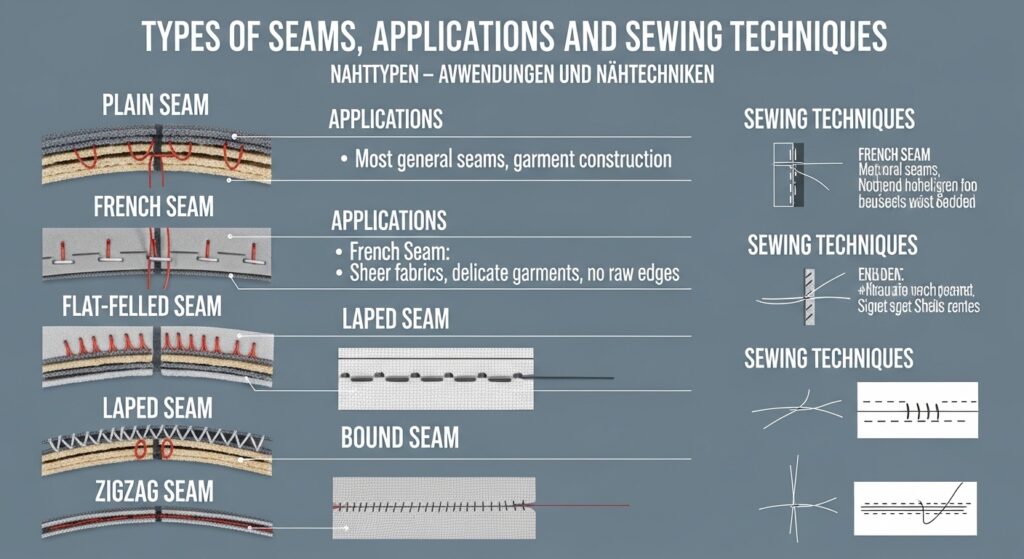
Nahttypen, or types of seams, are fundamental in sewing and garment construction. Understanding different nahttypen is essential for anyone working with fabrics, whether in fashion design, tailoring, or home sewing. Seams determine not only the strength and durability of a garment but also its appearance and comfort.
In both professional and amateur sewing, choosing the right nahttypen is crucial. Different fabrics, purposes, and garment styles require different seam techniques. Knowledge of nahttypen helps create garments that are functional, aesthetically pleasing, and long-lasting.
What Are Nahttypen?
Nahttypen refer to the various methods of joining two or more pieces of fabric together. Seams can serve multiple purposes: holding pieces together, shaping garments, reinforcing areas under stress, or adding decorative elements.
Each seam type has its characteristics and is suitable for specific fabrics and garment styles. For instance, some seams are designed for stretch fabrics, while others are ideal for thick materials. Choosing the correct nahttypen is a critical skill in sewing and garment design.
Common Nahttypen
Several nahttypen are widely used in sewing. Each type offers distinct advantages depending on the fabric and intended use.
| Nahttypen | Description | Applications |
|---|---|---|
| Steppnaht | A basic straight stitch seam | Shirts, skirts, light fabrics |
| Französische Naht | Fabric edges enclosed within the seam | Sheer fabrics, high-quality garments |
| Kappnaht | Overlapping seam for durability | Jeans, outerwear |
| Overlock-Naht | Edge-finishing seam that prevents fraying | Stretch fabrics, knitwear |
| Blindstichnaht | Invisible seam for hems and finishing | Skirts, dresses |
| Zwillingsnaht | Double-stitched seam for reinforcement | Sportswear, heavy-duty garments |
These nahttypen cover most common applications in garment making, providing options for durability, style, and finish.
Steppnaht (Straight Stitch Seam)
The Steppnaht is the most basic and commonly used seam. It involves stitching two fabric pieces together with a straight line of stitching. This seam is simple, quick, and versatile, making it suitable for a variety of lightweight and medium-weight fabrics.
Steppnaht is often used in everyday clothing, home textiles, and simple craft projects. While not the strongest seam, it can be reinforced with additional stitching when needed.
Französische Naht (French Seam)
Französische Naht is a seam where raw fabric edges are enclosed within the seam itself. This results in a clean and professional finish, ideal for delicate or sheer fabrics such as chiffon or organza.
This seam type is widely used in high-quality garments where both durability and aesthetic appeal are important. Französische Naht prevents fraying and adds a polished look to the inside of garments.
Kappnaht (Flat-Felled Seam)
Kappnaht or flat-felled seam is designed for durability and strength. It involves folding and stitching the seam so that raw edges are hidden. This type of seam is commonly found in jeans, workwear, and outerwear because it withstands heavy use.
Kappnaht provides a neat, professional finish on both sides of the fabric. It is particularly useful for garments subjected to stress and frequent washing.
Overlock-Naht (Overlock/Serger Seam)
Overlock-Naht is created using a serger or overlock machine. It finishes fabric edges while joining pieces together, preventing fraying and unraveling.
This seam is ideal for knit fabrics, stretchy materials, and activewear. Overlock seams are often used in modern garment production due to their speed and ability to create strong, flexible seams.
Blindstichnaht (Blind Hem Stitch)
Blindstichnaht is an almost invisible seam often used for hems. The stitching catches only a small portion of the fabric, making it ideal for skirts, dresses, and formal garments where an unobtrusive seam is desired.
This nahttypen adds a professional finish and is commonly used in both hand-sewn and machine-sewn hems.
Zwillingsnaht (Double-stitched Seam)
Zwillingsnaht or double-stitched seam provides extra reinforcement by stitching two parallel lines. This seam is used in garments that require additional strength, such as sportswear, uniforms, and heavy-duty clothing.
The double stitching ensures that the seam can withstand strain and adds durability to areas under stress, such as shoulders, side seams, and seat areas.
Choosing the Right Nahttypen
Selecting the correct nahttypen depends on several factors: fabric type, garment purpose, and desired aesthetic. Lightweight fabrics often benefit from Französische Naht or Steppnaht, while heavy-duty fabrics require Kappnaht or Zwillingsnaht.
Stretch fabrics demand seams that allow flexibility, such as Overlock-Naht. The goal is to combine durability, functionality, and visual appeal to create garments that are both comfortable and long-lasting.
Decorative Nahttypen
Some nahttypen are also used for decorative purposes. Topstitching, piping seams, and embroidery-enhanced seams can add style to garments while still providing functional strength. Decorative seams are often found on jackets, jeans, and designer clothing to enhance appearance without compromising durability.
These nahttypen demonstrate that seams are not only functional but also an important aspect of garment design and fashion.
Importance of Nahttypen in Garment Construction
Understanding nahttypen is essential for anyone in sewing or fashion design. The right seam type ensures that garments are strong, wearable, and visually appealing. Poor seam selection can result in fraying, tearing, or an unprofessional appearance.
Professional tailors, designers, and seamstresses rely on their knowledge of nahttypen to create garments that meet high standards of quality. Even home sewing enthusiasts benefit from understanding these seam types to achieve durable and attractive results.
Conclusion
Nahttypen play a crucial role in sewing and garment construction. From basic Steppnaht to professional Französische Naht and durable Kappnaht, each seam type has its unique purpose and benefits. Choosing the appropriate seam depends on fabric, garment function, and desired appearance.
Mastering nahttypen allows both professionals and hobbyists to produce high-quality, durable, and aesthetically pleasing garments. Understanding seams is not just a technical skill but an essential part of creating clothing that combines strength, style, and comfort.